You probably don’t spend much time in your attic. Most homeowners don’t, and that’s exactly why mold in the attic is one of the most common problems inspectors find during a home inspection. Attic mold can grow quietly for quite a while before anyone notices. By the time it’s discovered, usually during a pre-listing or buyer’s home inspection, the attic mold problem has often gotten much worse than it needed to be.
The good news is that mold in your attic is manageable when you catch it early and understand what you’re dealing with. This guide covers everything homeowners need to know: what causes attic mold growth, how to spot it, what it means for your family’s health, and what to do next.
Why Attics Are a Prime Breeding Ground for Mold
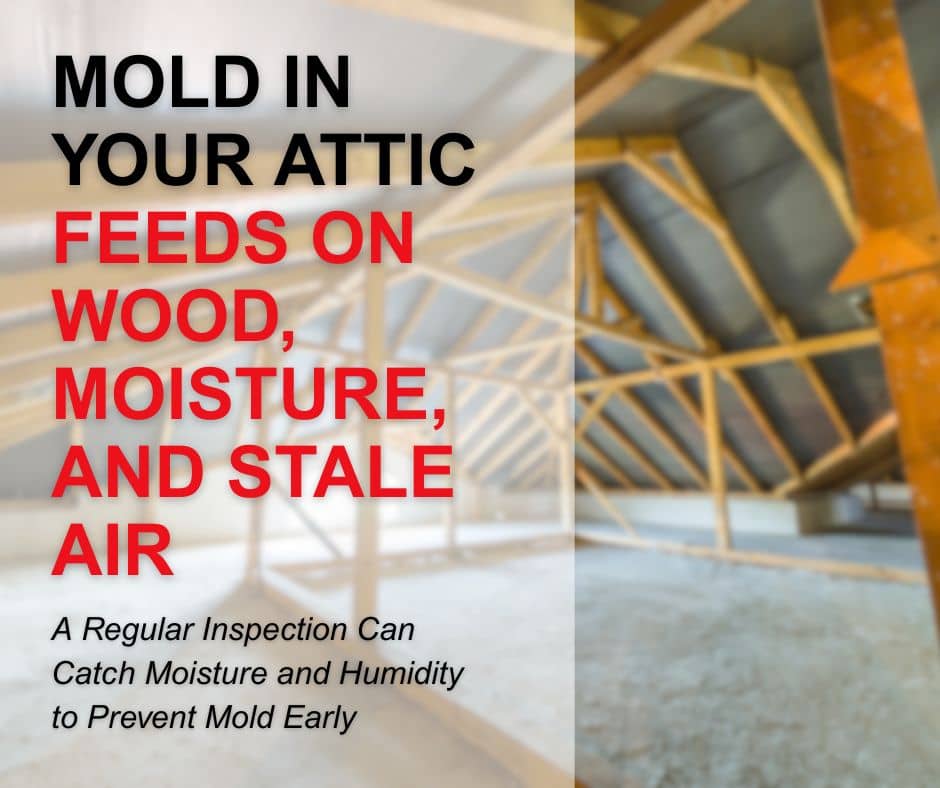
Mold thrives where three things come together: moisture, warmth, and an organic food source. Your attic checks all three boxes, and mold starts growing faster than most homeowners expect.
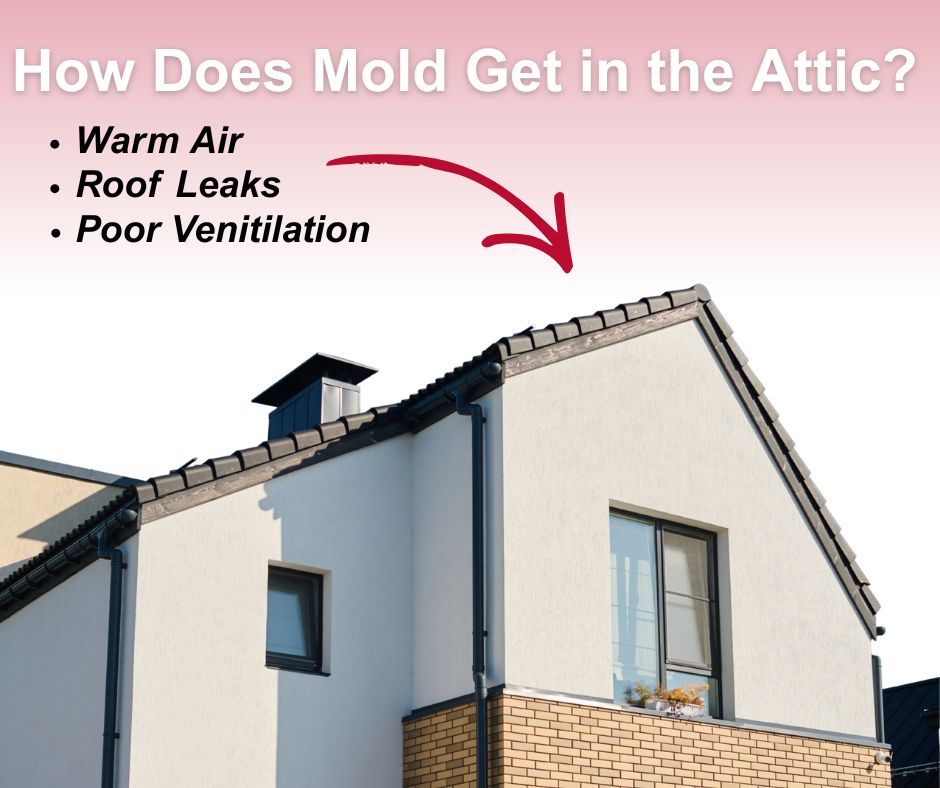
Attic mold growth is almost always a moisture problem. Warm air from your living spaces rises naturally, and when your home’s ventilation isn’t doing its job, that moist air gets trapped in the attic space. It hits the cold attic sheathing, condenses, and settles into the wood, creating a damp environment where mold spores can take hold within 24 to 48 hours of a moisture event.
The most common triggers include:
- Poor ventilation: Without balanced airflow between soffit vents and exhaust vents, humidity builds up and stays trapped, giving mold spores exactly what they need.
- Roof leaks: A leaky roof is a primary cause of attic mold. Even a small leak from damaged shingles or failed flashing can create a consistent moisture source that feeds mold for months.
- Improperly vented exhaust fans: Bathroom fan and kitchen exhaust fans that vent into the attic instead of outside pump warm, moist air directly into the attic space. This is a code violation in most areas and one of the leading causes of attic mold growth.
- Inadequate insulation: When the attic isn’t properly insulated, warm air from below escapes and meets cold roof surfaces, causing condensation that promotes mold growth.
- High indoor humidity: In humid climates, excess moisture from daily living can accumulate in the attic if air sealing and ventilation aren’t adequate.
How to Spot Mold in Your Attic
Knowing the warning signs helps you catch an attic mold problem before it becomes a big deal. Here’s what to look for when you venture up there:
Visual signs on wood surfaces:
- Dark spots or streaks on roof sheathing, rafters, or joists
- Typically black, gray, green, or brown
- Fuzzy growth on attic sheathing or framing
- This three-dimensional pattern is actually less common but easier to remediate
- Black lines running along the wood grain
- Red flag for mold that has been developing for some time
- Discolored or deteriorating insulation
- Rusted nail head
- Signal prolonged excess moisture
Other indicators:
- A musty or earthy smell near the attic hatch is often the first sign before mold is even visible
- Staining or discoloration on ceilings directly below the attic
- Unexplained allergy symptoms that improve when you leave the house
Because mold can grow in areas that are hard to access or still in early stages, a visual check from the attic hatch only goes so far. A home inspection or a dedicated mold inspection gives you a thorough, professional assessment of the full attic space.
Health Risks of Attic Mold
It’s easy to assume that mold up in the attic isn’t a real problem for the people living below. But mold spores are airborne. They travel through ceiling gaps, light fixtures, HVAC returns, and any connection between the attic and your living spaces, and once they’re circulating, everyone in the home is breathing them.
Common symptoms from mold exposure include respiratory issues like coughing and wheezing, allergic reactions such as sneezing and itchy eyes, skin irritation, and persistent headaches or fatigue. Children, older adults, and anyone with asthma or compromised immune systems are especially vulnerable.
Toxic molds like Stachybotrys chartarum, commonly called black mold, thrive in damp, humid conditions and pose significant health risks, including serious respiratory problems with prolonged exposure. Some molds produce mycotoxins that can affect brain function and the nervous system over time.
One reason attic mold often goes unaddressed is that early symptoms are easily mistaken for allergies or a lingering cold. If your household experiences recurring symptoms that don’t have a clear cause, mold in your attic is worth ruling out with a professional inspection.
The U.S. EPA recommends that mold covering more than 10 square feet be handled by professionals. Anything larger poses health risks that require specialized equipment and techniques to safely address.
What Attic Mold Does to Your Home’s Structure
Mold doesn’t just affect your family’s health; it also damages your home. Attic mold feeds on wood surfaces, breaking down the fibers in your roof sheathing, rafters, and structural framing over time. What begins as surface staining can progress to soft, weakened wood that no longer supports the roof properly.
Watch for soft or spongy spots in attic framing, blackened or rotted wood along the grain, or sagging roof decking visible from outside. These are signs that the attic mold problem has advanced into structural territory, and that remediation costs will be significantly higher than they would have been with earlier action.
How to Prevent Mold Growth in the Attic
Preventing future mold growth comes down to controlling moisture. The U.S. EPA identifies moisture control as the single most effective way to prevent indoor mold. Keeping indoor humidity between 30% and 50% is the target.
Here’s how to get there:
- Balance your attic ventilation. A properly ventilated attic needs both intake vents (soffit vents along the eaves) and exhaust vents (ridge vents or roof vents near the peak). Fresh air enters at the bottom, pushes humid air out at the top, and keeps conditions dry. Installing additional vents may be necessary if your current setup is inadequate — an insulation contractor or roofing contractor can assess this.
- Redirect exhaust fans. All bathroom fans and kitchen exhaust fans must vent directly outside — never into the attic. If your vents vent into the attic space, correcting this is one of the most impactful things you can do to prevent mold growth.
- Inspect your roof regularly. Periodic roof inspections help identify missing shingles, loose flashing, and clogged gutters before they become a moisture source. Address roof problems promptly; even a slow drip creates the humid conditions mold needs.
- Make sure the attic is properly insulated. Attic insulation should be evenly distributed to slow conditioned air loss and reduce condensation on cold surfaces. An insulation company can evaluate whether you have additional insulation needs or gaps that are allowing warm, moist air to reach the roof sheathing.
- Practice air sealing. Sealing gaps around ceiling fixtures, plumbing penetrations, and attic hatches reduces the amount of moist air that escapes from living spaces into the attic in the first place.
Regular inspections, ideally each spring and fall, are the simplest way to catch developing conditions before they become a full attic mold problem.
Removing Mold From the Attic: What Homeowners Should Know
If you discover mold in your attic, professional mold removal is almost always the right call. Here’s why DIY approaches fall short:
First, it’s difficult to assess the full extent of mold growth without professional tools. What’s visible is often only part of the problem. Second, disturbing mold without proper containment spreads spores into living spaces below. Third, bleach does not effectively remove attic mold from wood surfaces. It doesn’t penetrate the surface to kill mold at its roots, which means it comes back.
Professional remediation involves specialized equipment, including negative air machines that create containment and filter spores from the air, and techniques like dry ice blasting, which is particularly effective for removing attic mold from wood surfaces without damaging the sheathing. Encapsulation may also be used to seal treated surfaces and prevent future mold growth.
Critically, removing mold without addressing the underlying moisture issue, whether that’s a roof leak, poor ventilation, or misdirected exhaust fans, will result in the mold returning. Professional mold remediation addresses both the mold and the root cause together.
Related Questions About Mold in Attic
Does homeowners’ insurance cover attic mold removal?
Usually not. Mold resulting from long-term moisture buildup, poor ventilation, or deferred maintenance is typically excluded. Coverage may apply if mold was caused by a sudden, covered event like a burst pipe, but confirm with your specific policy.
Can new construction homes develop attic mold?
Yes, if framing lumber gets wet before the roof is installed, or if attic ventilation isn’t properly balanced from the start, mold can develop in new construction just as it can in older homes. A new construction inspection that includes the attic is a smart step.
How does attic mold affect a home sale?
Attic mold discovered during a buyer’s home inspection can delay or derail a transaction. Most states require sellers to disclose known mold issues, and treating mold that has gone undetected can cost several thousand dollars. A pre-listing inspection is one of the best ways sellers can stay ahead of this.
When to Call a Professional
Schedule a professional mold inspection if:
- You notice a musty smell near the attic hatch or in rooms below the attic
- You’ve had any roof leak or water intrusion, even a minor one
- A home inspection flagged moisture concerns or signs of mold
- You’re preparing to list your home and want a clean bill of health
- Someone in your household has persistent, unexplained respiratory issues or allergic reactions
The sooner you address an attic mold problem, the less it costs, and the better it is for your family’s health. Get in touch with a HomeTeam inspector near you and protect your home and your health.
Conclusion
You shouldn’t have to wonder what’s happening in your attic. HomeTeam Inspection Service offers mold inspection and testing alongside a full range of inspection services, including pre-listing inspections, new construction inspections, sewer scoping, pool and spa inspections, and more. Our team model means faster, more thorough inspections, because more trained eyes catch more issues.
Find your local HomeTeam and schedule your inspection today.