
Indoor air quality services are professional checks and fixes for the air inside your home. They can include testing for things like mold, radon, and dust, plus filter, ventilation, and air purifier work. HomeTeam offers air quality testing at some franchise locations, and the right service depends on what is bothering you. A musty smell, a damp basement, or a spring full of sneezing can all point to an air problem.
This guide explains what these services include, what testing can and can’t tell you, how the seasons change your air, and when to call a pro.
What Are Indoor Air Quality Services?
Indoor air quality services are professional steps that find and fix problems with the air inside your home. Most fall into four groups: testing, source repair, HVAC work, and air cleaning.
| Type of service | What it does | A common example |
| Testing and assessment | Checks the air and the home for pollutants and moisture | Mold, radon, or carbon monoxide testing |
| Source repair | Stops the thing that is polluting the air | Fixing a leak or a damp crawl space |
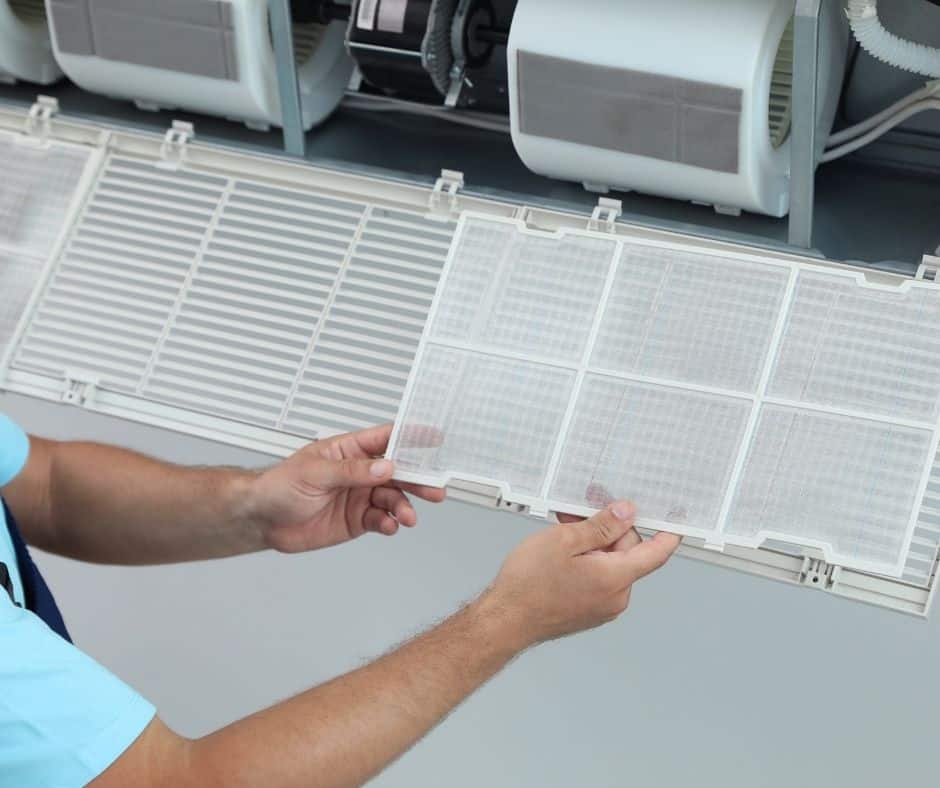
| HVAC work | Keeps filters, ducts, and airflow in good shape | Filter changes or duct cleaning |
| Air cleaning | Removes particles or controls humidity | An air purifier or a dehumidifier |
The EPA lists many everyday sources of indoor air pollution. They include fuel-burning appliances, building materials, furnishings, cleaning products, HVAC systems, and extra moisture, according to the EPA’s introduction to indoor air quality. Some of these sources release pollutants all day. Others, like smoking or cleaning, add pollutants for a short time, and the pollutants can linger after the activity ends.
Because the causes vary so much, a good service starts by finding the cause. It does not start with a product.
What Does Indoor Air Quality Testing Check For?
A full air quality test can look for several different things, and each one needs its own kind of test. Here are the most common targets:
- Mold spores: Mold needs moisture to grow. Testing can show whether spore levels or damp spots point to a hidden problem.
- Radon: This is a naturally occurring radioactive gas that can cause cancer. It has its own test.
- Carbon monoxide: This gas comes from fuel-burning appliances. Working carbon monoxide alarms are your main safeguard.
- Volatile organic compounds (VOCs): These are chemicals that some paints, cleaning products, and furnishings can release into the air.
- Dust and allergens: Pollen, pet dander, and dust can build up in a home and in the HVAC system.
- Humidity and temperature: Basic readings that show whether conditions in your home invite mold or other moisture problems.
Some HomeTeam locations offer indoor air quality testing, often alongside mold inspection and testing. Radon has its own radon testing service. Services vary by location, so check with your local team to see what they offer.
Is Indoor Air Quality Testing Worth It?
Testing is worth it when you have a reason to look. It is not always the best first step.
The Connecticut Department of Public Health explains this well in its guide on whether to test indoor air. According to that state health department guide, testing helps most in these cases:
- You already suspect a certain pollutant or source, and you want to learn how big the problem is.
- You want to tell the difference between a few possible sources.
- The results can be compared to a health-based standard.
The same guide also says testing is not always the right first move. Keep these points in mind:
- A test can raise more questions than it answers. That is why it is a poor first response to a complaint.
- Most indoor pollutants have no health-based standards. That makes many results hard to read.
- Mold has no safe or unsafe level. Molds found outdoors also show up indoors, so a mold test will usually find some.
- Radon is the clear exception. It has a health-based guideline, so the results are easier to read.
So what should you do first? Take a good look at your home. A walk-through can find leaks, damp spots, blocked vents, and dirty filters. Those are often the real causes. Add testing when you need numbers for a specific concern, like radon or a lingering musty smell.
DIY Monitor or Professional Test?
| DIY air quality monitor | Professional test | |
| Best for | Tracking basics over time on a tight budget | Finding the cause of a specific concern |
| What it checks | Humidity, particulate matter (tiny bits of dust and smoke), and VOCs | Whole-home review plus tests like radon and lab-checked mold samples |
| Limits | Cannot tell you where a leak is hiding, and sensor readings are not lab results | Costs more and takes a scheduled visit |
What Does It Cost?
- National range: Cost guides often list a home air test between about $300 and $620.
- What changes the price: Your home size and the number of tests you add.
Wondering what a test would look like for your home? Find your local HomeTeam inspection team and ask what they offer.
How the Seasons Change Your Indoor Air
Your indoor air changes with the seasons because the weather changes how much fresh air gets in and what comes in with it.
| Season | What changes in your air | What can help |
| Spring and fall | Pollen and mold spores are common. They get in through open windows and doors, and they ride in on shoes, clothes, and pets. | Change your HVAC filter on schedule and wipe down entry areas. |
| Winter | Windows stay shut and the heat runs. The EPA says pollutants can build up when too little outdoor air comes in, so a tightly sealed home can feel stuffy and smell stale. | Run exhaust fans and air out the home when you can. |
| Summer | The EPA notes that high temperature and humidity can raise the level of some pollutants. | Check damp spaces like basements and crawl spaces when the air gets muggy. |
Where you live matters, too; in humid parts of the country, like the Southeast and Gulf Coast, moisture and mold are the bigger worry. In dry places like the Southwest, dust and pollen get more attention. HomeTeam teams work in towns across the country, so your local team knows what is common in your area.
Want a seasonal routine to follow? Our fall home maintenance checklist and seasonal home maintenance guide cover many of the tasks that also help your air.

Simple Ways to Improve Your Air Before You Call Anyone
Many air problems start with moisture, dust, or poor airflow, and you can handle a lot of that yourself. Try these steps first:
- Fix leaks and dry wet spots fast. Mold needs moisture. Water from a leak, a spill, or a damp basement should be dried quickly.
- Run exhaust fans. Use the bathroom fan during and after showers. Use the kitchen fan when you cook.
- Change your HVAC filter on schedule. Check the filter size and the replacement schedule in your system’s manual.
- Clean often. Vacuum floors and wash bedding on a regular schedule to cut down on dust and dander.
- Check your alarms. Test smoke and carbon monoxide alarms and replace the batteries when needed.
- Open windows when the weather allows. Fresh air helps move pollutants out. Skip this on high-pollen days if pollen bothers you.
An air purifier can help with particles in the air. It will not fix a leak or remove a source of mold. Think of it as one tool, not a cure. If the problem points to mold, a pro can also talk with you about remediation, which means cleaning up and fixing the cause.
Related Questions to Explore
- How does indoor air quality testing work? A trained tester looks over the home and checks for moisture, airflow problems, and likely sources of pollution. Then they take air readings or samples. Some samples go to a lab. You get a report that explains what was found and what to do next.
- How much does indoor air quality testing cost? National cost guides often show a range of about $300 to $620. Your price depends on your home’s size, the tests you choose, and your area. Ask your local HomeTeam team for a quote.
- What are the signs of poor indoor air quality in a home? Common signs include a musty or stale smell, visible mold or damp spots, more dust than usual, and water droplets on windows. Some people also notice that sneezing or a stuffy nose gets better when they leave the house. These signs do not prove what the cause is. They are a good reason to look closer.
- Does indoor air quality testing include mold and radon? Sometimes, but not always. Mold and radon are separate tests, and each one works differently. Ask what is included before you book. HomeTeam offers mold inspection and testing and radon testing at many locations.
- Do air purifiers and better HVAC filters improve indoor air? They can help with airborne particles like dust and pollen. They do not stop the source of a problem, such as a leak or a damp area where mold grows. Fix the source first, then use filters and purifiers as extra help.
- Should I get an air test before buying a home? It can be a smart add-on if you or a family member has allergy concerns, or if the home has had water damage. A home inspection is the best first step, and your inspector can tell you if extra testing makes sense. Radon testing is a common add-on at this stage.
When to Call a Professional
You can handle filters, fans, and cleaning on your own. Call a professional when the problem is bigger than a routine fix. Here are good times to reach out:
- You see or smell mold and cannot find the cause.
- Your home had a leak, a flood, or other water damage.
- A musty smell keeps coming back after you clean.
- Several people in the home feel worse at home and better away from it.
- You are buying or selling a home and want a clear picture of its condition.
- You have never tested for radon.
- You have fuel-burning appliances and want them checked.
If a carbon monoxide alarm sounds, do not wait. Get everyone outside and call emergency services from a safe place.
A pro can look at the whole home, not just one room. That matters because air problems often have more than one cause. A local HomeTeam team can tell you which services they offer and what makes sense for your home. When you are ready, you can schedule your inspection.
Conclusion
Good indoor air starts with finding the cause of a problem, not with buying a gadget. Here is what to remember:
- Indoor air quality services include testing, source repair, HVAC work, and air cleaning.
- Testing helps most when you have a specific concern, like radon or a lingering musty smell.
- Seasons, weather, and where you live all change what is in your air.
Not sure where to start? Learn more about HomeTeam’s indoor air quality testing, or find an inspection team near you to talk through your options.